
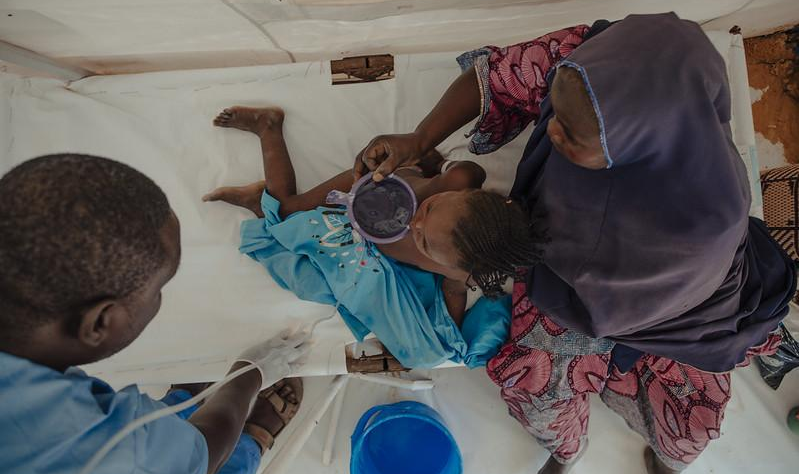
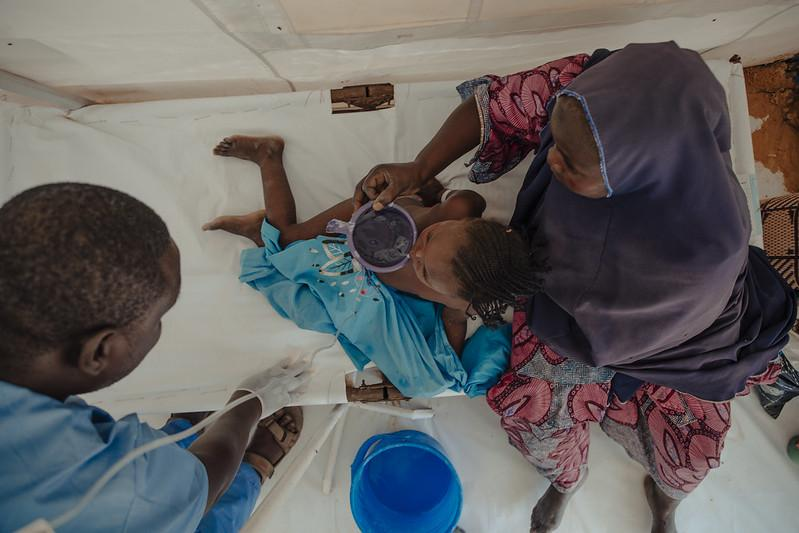
After more than three years of disruption, the world has reached a long-awaited milestone in the fight against cholera. UNICEF, the World Health Organization (WHO), and Gavi, the Vaccine Alliance announced on February 4, 2026, the resumption of preventive cholera vaccination campaigns, marking the first such effort since global vaccine shortages forced their suspension in late 2022.
The restart begins in Mozambique, a country battered by repeated cholera outbreaks and climate-driven flooding, and will extend to the Democratic Republic of the Congo (DRC) and Bangladesh. A fresh allocation of 20 million oral cholera vaccine doses has been approved, including 3.6 million already delivered to Mozambique.
The decision signals a decisive shift from emergency response toward long-term prevention, as global vaccine supply rebounds to nearly 70 million doses in 2025, double the level recorded in 2022.
“These vaccines will save lives,” said WHO Director-General Dr. Tedros Adhanom Ghebreyesus. “Resuming preventive campaigns marks a critical step toward sustainable cholera control.”
From Crisis Response to Prevention
Cholera is an acute diarrheal illness caused by the bacterium Vibrio cholerae, spreading rapidly in areas without access to clean water and sanitation. While the disease can kill within hours if untreated, most fatalities are preventable with timely oral rehydration therapy.
Yet the global burden remains staggering. In 2025 alone, more than 630,000 cases and 7,800 deaths were reported across 33 countries, underscoring cholera’s continued grip on vulnerable populations.
What distinguishes the newly resumed campaigns is their preventive focus. Unlike reactive efforts launched during outbreaks, these initiatives target high-risk hotspots before transmission accelerates. For years, vaccine shortages forced health agencies to rely on single-dose emergency regimens that provided only short-term protection.
With supply stabilizing, global health authorities are now shifting from containment to anticipation.
The Shortage That Stalled the World
The suspension of preventive campaigns traces back to late 2022, when an unprecedented surge in global cholera cases overwhelmed the international oral cholera vaccine stockpile. Managed by the International Coordinating Group, which includes WHO, UNICEF, Gavi, and Médecins Sans Frontières, the stockpile was rapidly depleted as outbreaks spread across continents.
Between 2021 and 2022, emergency demand surged to 48 million doses, exceeding the total doses used during the entire previous decade. Preventive allocations were the first casualty.
Several factors converged. Vaccine production relied on just two manufacturers: South Korea’s Eubiologics and India’s Shantha Biotechnics, a Sanofi subsidiary. In late 2022, Sanofi discontinued Shantha’s production for commercial reasons, leaving Eubiologics as the primary global supplier.
At the same time, climate shocks and conflicts accelerated transmission. Floods in Pakistan, cyclones in Mozambique, and mass displacement linked to wars in Ukraine and Sudan contaminated water systems and overwhelmed fragile health services.
By October 2022, the International Coordinating Group suspended the standard two-dose regimen, opting for single doses to stretch limited supply. Even reactive campaigns were intermittently halted during 2023 and 2024 as the stockpile ran dry.
The consequences were severe. Reported cases rose to 535,000 in 2023, up 13 percent from the previous year, and exceeded 800,000 in 2024, a 50 percent increase. Deaths rose by 71 percent in 2023 alone. Preliminary figures for 2025 recorded 614,828 cases and 7,598 deaths by year’s end.
Production Rebounds Through Global Coordination
The turning point came through coordinated international action. Gavi’s 2023 roadmap prioritized expanding manufacturing capacity, attracting new producers through risk-sharing mechanisms, and improving global demand forecasting.
By 2025, monthly production reached six million doses, the highest level since 2013. This recovery restored confidence in the stockpile and enabled the resumption of preventive strategies that experts say are essential for long-term control.
“This resurgence is not just about numbers,” a WHO official noted. “It reflects what global collaboration can achieve even amid what many have called a forgotten pandemic.”
Africa at the Epicenter
The geography of cholera highlights deep global inequalities. While historically concentrated in South Asia, the disease’s epicenter shifted sharply toward Africa by 2023. Cases declined by 32 percent in the Middle East and Asia but surged by 125 percent across the African continent.
In 2025, Africa accounted for the majority of global cases, with the African and Eastern Mediterranean regions reporting the highest burden.
The DRC experienced its worst outbreak since 1994, reporting 71,147 cases and 2,071 deaths across 21 of its 26 provinces. In Mozambique, repeated outbreaks followed Cyclone Freddy in 2023, as floods destroyed water infrastructure in coastal and lakeside communities.
Other persistent hotspots include Ethiopia, Zimbabwe, Zambia, Sudan, and South Sudan, particularly in the Lake Chad basin and Great Lakes region. In many of these areas, fewer than half of households have access to basic water services.
Asia remains vulnerable, especially in Afghanistan, Yemen, and Pakistan, while the Americas saw renewed transmission in Haiti after years of control. Climate variability, including the 2023 El Niño event, has intensified displacement and contamination of water sources worldwide.
WHO modeling suggests that preventive campaigns in high-risk zones could reduce cholera incidence by 50 to 80 percent.
The Hidden Economic Cost of Cholera
Beyond its human toll, cholera imposes heavy economic costs on low-income countries. Direct treatment expenses are often overshadowed by indirect losses such as missed work, school closures, disrupted trade, and strain on already fragile health systems.
In Africa, a 2015 estimate placed the economic burden at USD 130 million for over one million cases. When productivity losses and premature deaths are included, costs can exceed USD 1,000 per case.
Mozambique offers a stark example. A 2007–2008 outbreak involving 125,000 cases cost the country USD 53.2 million, equivalent to 0.5 percent of GDP at the time. In 2023, flooding and cholera affected more than 700,000 people and destroyed 391,000 hectares of crops.
Globally, cholera’s annual economic impact is estimated at over USD 2 billion, a figure likely higher given recent surges. Preventive vaccination delivers strong returns, with every dollar invested yielding USD 2 to 3 in savings through avoided outbreaks.
Prevention and the Road Ahead
While the resumption of preventive vaccination marks a major advance, experts caution that vaccines alone are not enough. Sustained progress depends on expanding access to clean water and sanitation. Currently, only 60 percent of Africans have access to basic water services.
“It must go hand in hand with better access to safe water,” said UNICEF Executive Director Catherine Russell, emphasizing the need to integrate vaccination with long-term water, sanitation, and hygiene investments.
As climate pressures intensify, cholera’s reach may continue to expand. Yet the renewed availability of vaccines offers a rare window of opportunity.
Mozambique’s campaign represents more than a public health intervention. It is a step toward equity, resilience, and dignity for communities that have borne the brunt of a preventable disease for generations.
The challenge now is sustaining momentum. Cholera’s defeat lies not only in vaccines, but in the collective will to build systems that leave no one exposed.